


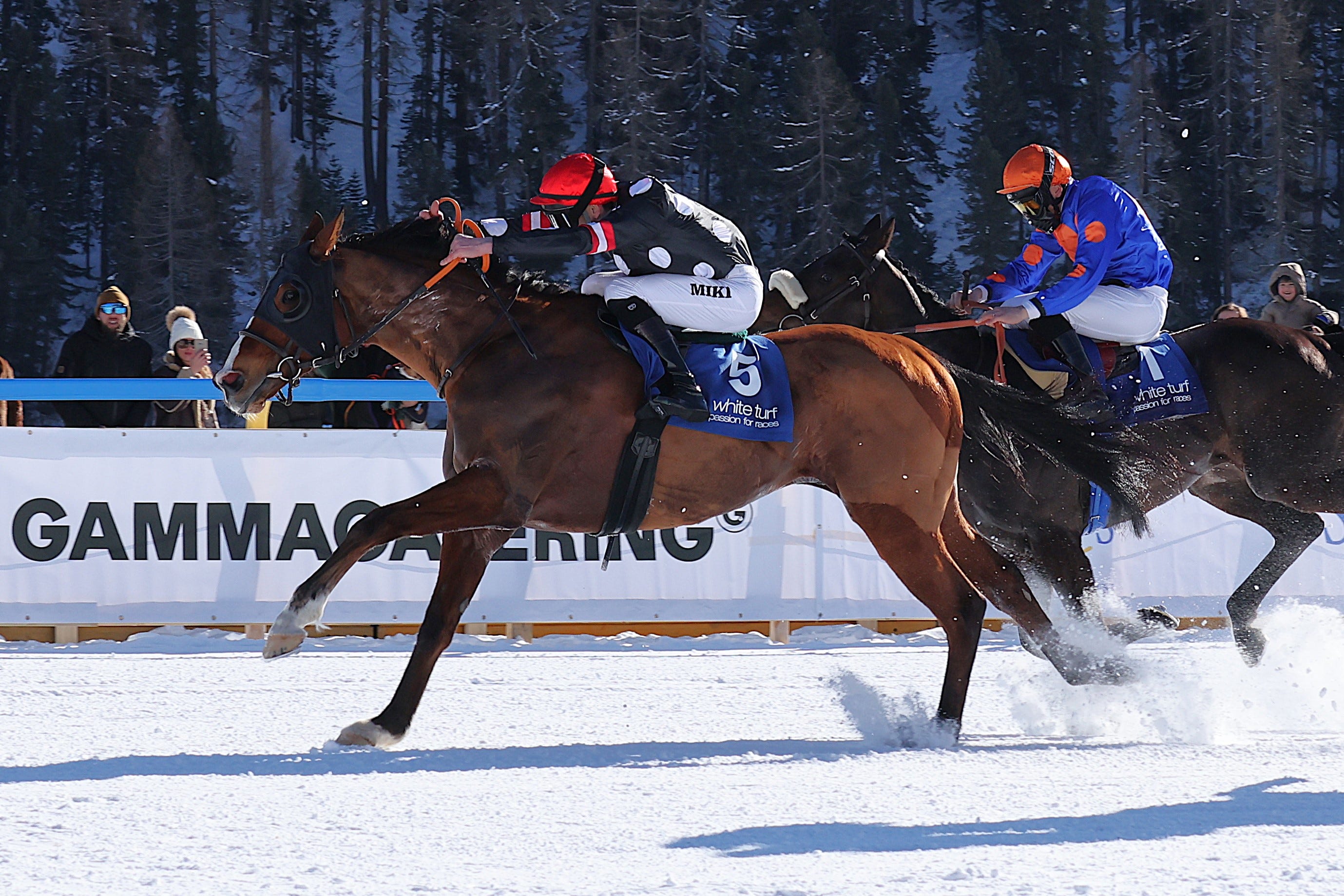
The lake freezes. The horses come.
Every February, sixty centimeters of ice form over Lake St. Moritz in the Upper Engadin valley of Graubünden, Switzerland. The lake sits at 1,768 meters above sea level. When the surface hardens, a racecourse is measured, packed, and marked across the frozen water. Thoroughbreds arrive from across Europe. Jockeys are briefed on conditions that exist nowhere else in competitive racing. Studded shoes replace standard horseshoes. There is no turf. No dirt. Only compacted snow over ice, and the sound it makes when a thousand-pound animal hits it at speed.
This is White Turf. It has been running since 1907. It has never left the lake.
The origin is specific enough to feel invented.
In 1906, British winter tourists in St. Moritz tied ropes to horses and skied ten kilometers down the road from St. Moritz to Champfer. Philip Mark, president of the Alpina Ski Club, won the race on a horse named Blitz. German for lightning. No spectators. No rules. No course. Just a man, a horse, a frozen road, and the question of whether speed on ice was sport or recklessness.
The following February, the answer moved onto the lake. The first official White Turf staged trotting races and skijoring on the frozen surface. Flat races followed in 1911.1 What began as a dare calcified into a date. What became a date became a calendar. What became a calendar has not missed a February in over a century.


Three Sundays. First race at 11:30. Last by 15:00. Distances from 1,300 meters to 2,700 meters. Prize money totaling roughly half a million Swiss francs. Over 30,000 spectators across the three weekends. A tent city of 130,000 square meters rises on the ice. Grandstands, kitchens, bars, art exhibitions, a children’s area. All of it temporary. All of it gone by March.
The infrastructure is built on a surface that will not exist in eight weeks. That fact governs everything.
The centerpiece is the skijoring, and nothing else in sport looks like it.
The word comes from the Norwegian “snorekjoring.” Driving with ropes. In the Swiss version, which exists only here, the horses carry no rider. The skier holds the reins. He steers. He balances. He negotiates 2,700 meters of frozen lake at fifty kilometers per hour behind a riderless thoroughbred that knows exactly what it is doing and does not care whether the human behind it can keep up.
The sport was proposed as a medal event for the 1928 Winter Olympics, hosted in St. Moritz. It was rejected. It appeared once, as a demonstration, on February 12, 1928.2 The Olympic committee may have understood what the locals already knew: this sport cannot be exported. It belongs to the lake.
In 1965, not a single skijoring team finished. The conditions defeated every entry. The race was recorded, not canceled. The following year, they ran it again. The year after that, again.
The winner across the three Sundays is crowned King of the Engadin Valley. A title with no prize money, no trophy of consequence, and no commercial value. A title that exists because the lake froze.
“In a world where everything is replaceable, White Turf is unique. There are 400,000 horse races worldwide every year. This is the only one on a frozen lake.” Thomas Walther, President, White Turf
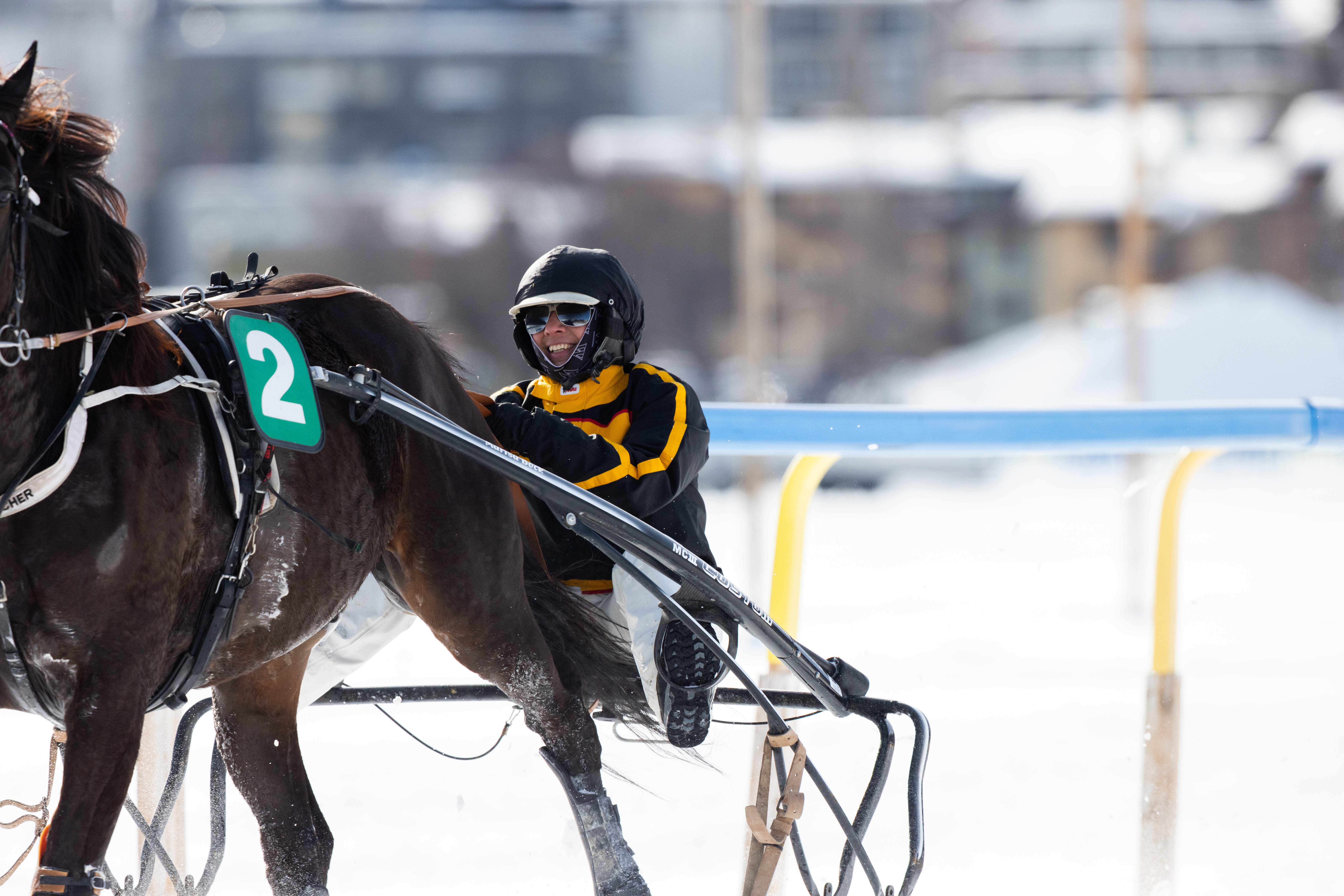
What separates White Turf from every other event on the sporting calendar is a single word: dependency.
Wimbledon has a retractable roof. Formula 1 resurfaces its circuits. The Kentucky Derby maintains its turf with surgical precision. White Turf controls nothing. It depends on winter arriving, the lake freezing to sufficient depth, and the temperature holding across three consecutive weekends. If the winter is mild, there is no ice. If there is no ice, there is no event. No backup venue. No indoor alternative. No rescheduling.
In January 2026, the ice on Lake St. Moritz was so thin it could barely support a log. By February, winter delivered. The races proceeded.
This dependency is what separates ritual from entertainment. Entertainment is manufactured. Ritual is conditional. The condition here is winter itself. The organizers do not produce White Turf. They wait for it.
St. Moritz understood this before anyone.
In 1864, hotelier Johannes Badrutt made a wager with a group of British summer guests: return in winter, and if you do not enjoy yourselves, he would cover every expense. They returned. They stayed. The winter season was born. From that wager came the Cresta Run in 1884. Bobsleigh. Skeleton. Polo on the frozen lake every January. And White Turf every February.
Each sport was an act of choreography applied to cold. St. Moritz did not endure winter. It gave winter a program. But of all the sports that emerged from the ice, White Turf remains the most dependent on it. Polo has been exported. Bobsleigh travels the world. The Cresta Run operates on a constructed track. White Turf operates on a lake that must freeze on its own terms, to its own depth, on its own schedule.
No one builds the venue. The climate does.
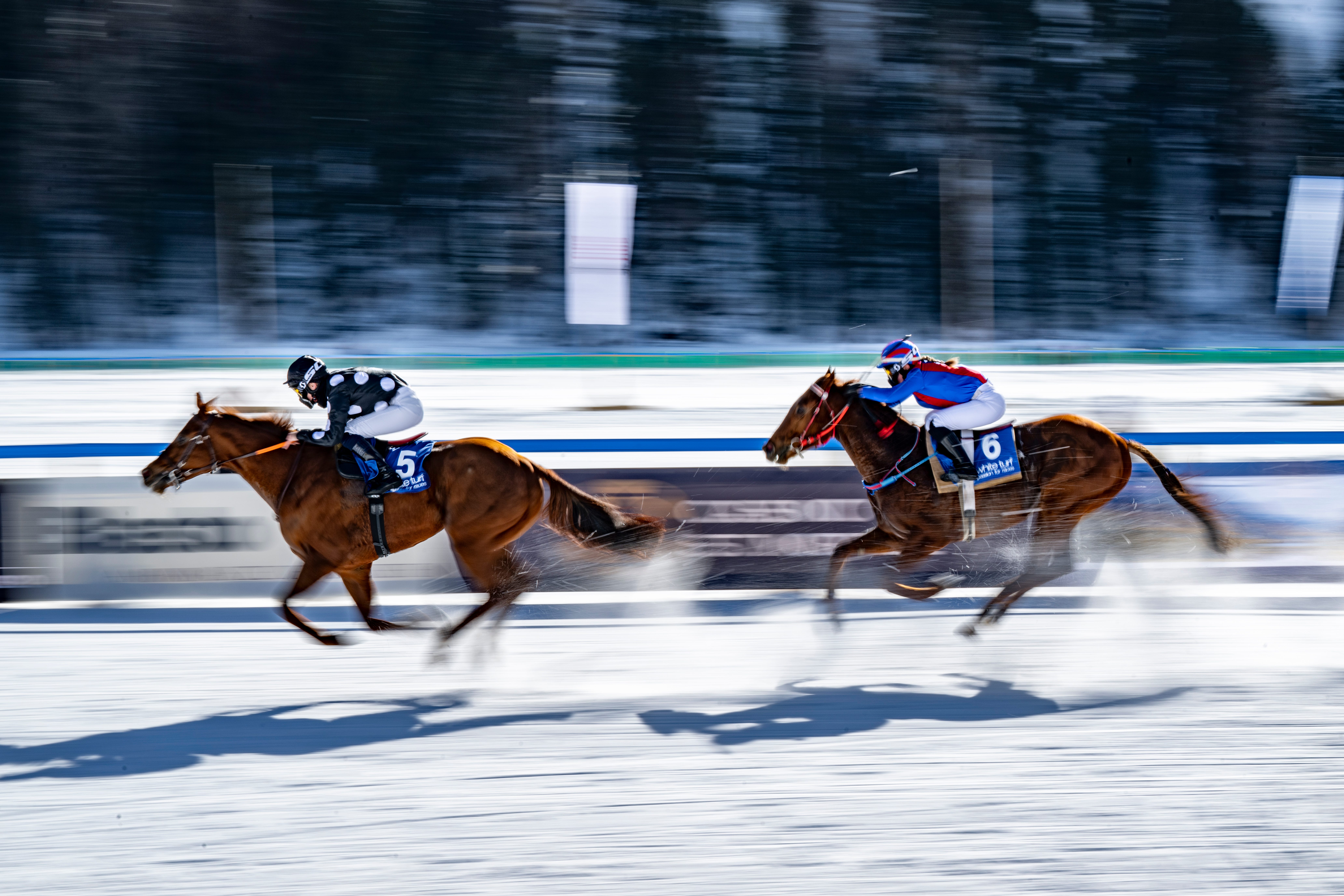
There is something worth protecting in a spectacle that cannot be manufactured.
In an era that designs experiences for audiences who will never attend in person, White Turf remains stubbornly physical. You cannot stream a frozen lake into existence. You cannot fabricate sixty centimeters of ice. You cannot digitize the sound of hooves hitting packed snow at speed, the spray of white behind a skijoring team through the final turn, the way the Engadin light sits on the mountains at 14:00 in February when the flat race field separates and the crowd leans forward.
The event requires presence. Not as a luxury. As a condition. The horses must be there. The cold must be there. The ice must hold.
“You cannot stream a frozen lake into existence.”
When the third Sunday ends, the infrastructure comes down. Tents dismantled. Grandstands removed. Course markings erased. Within weeks, the ice begins to thin. By spring, the lake is water again. There is no monument on the shore. No plaque marking where Blitz ran in 1906, or where no one finished in 1965, or where for one hundred and nineteen winters the same frozen surface held the same improbable sport.
The lake returns to what it was before the race. The race returns to where it always goes. Somewhere between memory and forecast. Somewhere between the last thaw and the next freeze.
One hundred and nineteen winters. The same lake. The same wager against the season.
White Turf does not outlast winter. It is the proof that winter arrived.
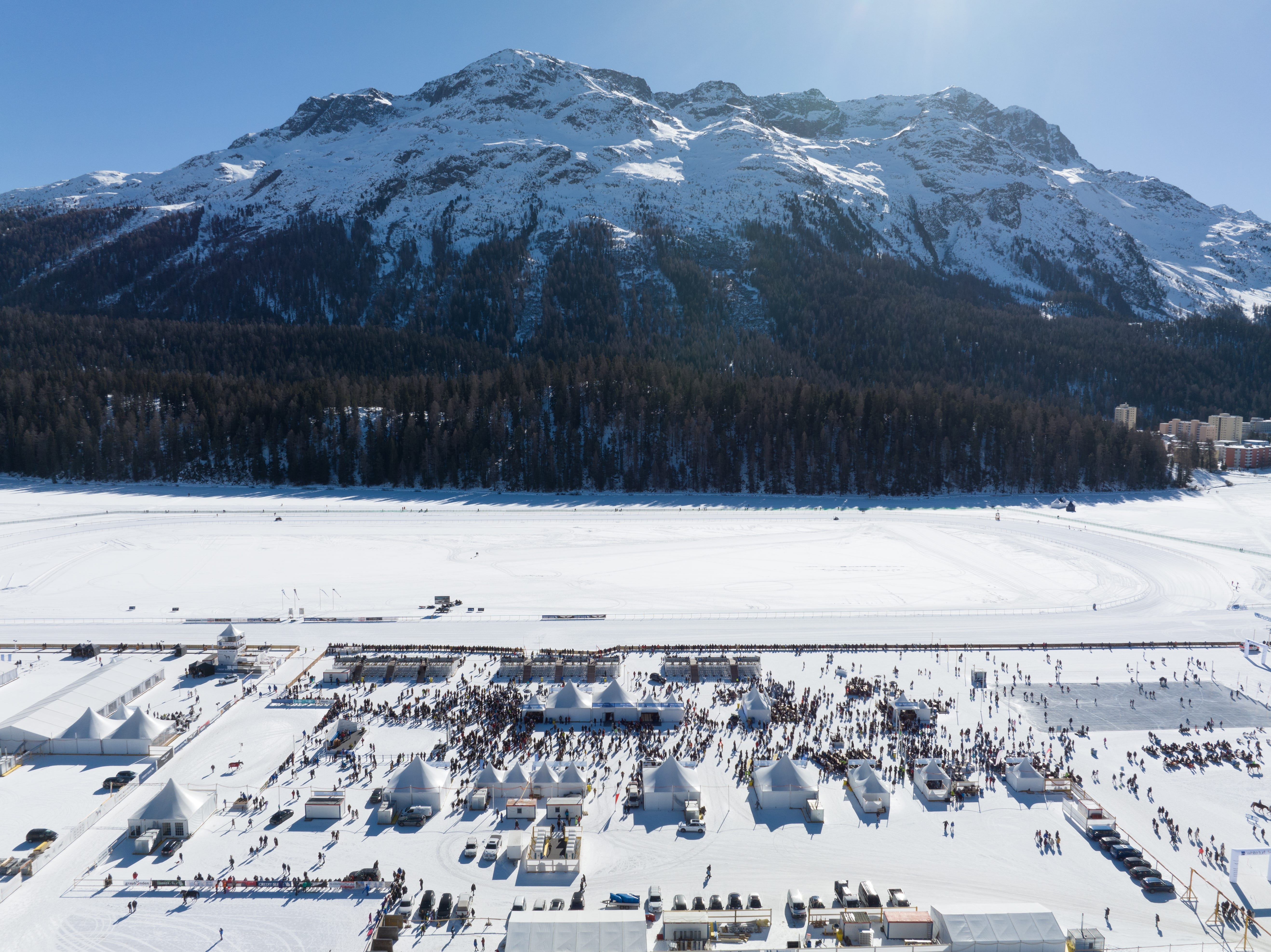
All images courtesy of White Turf
Higher Class Editions
Venustas Ante Omnia
The Rennverein St. Moritz, the racing association that organizes White Turf, has overseen the event since its founding. Thomas Walther, a fourth-generation family hotelier from Pontresina, has served as president of the board since 2016.
Skijoring appeared as a demonstration sport at the 1928 Winter Olympics in St. Moritz on February 12, 1928. It was never accepted as a medal event. The sport remains exclusive to St. Moritz in its original competitive form