


Every hotel in Midtown makes a promise. Aman New York keeps fewer of them, and means all of them.
Adrian Zecha walked Pansea Beach in Phuket in 1988. He was looking for land to build a holiday home. He found a coconut plantation instead. Forty rooms opened that year as Amanpuri.1 The name is Sanskrit. “Aman” means peace. The thesis was plain: luxury does not perform. It hosts.
Thirty-six properties later, the thesis landed at Fifth Avenue and 57th Street.


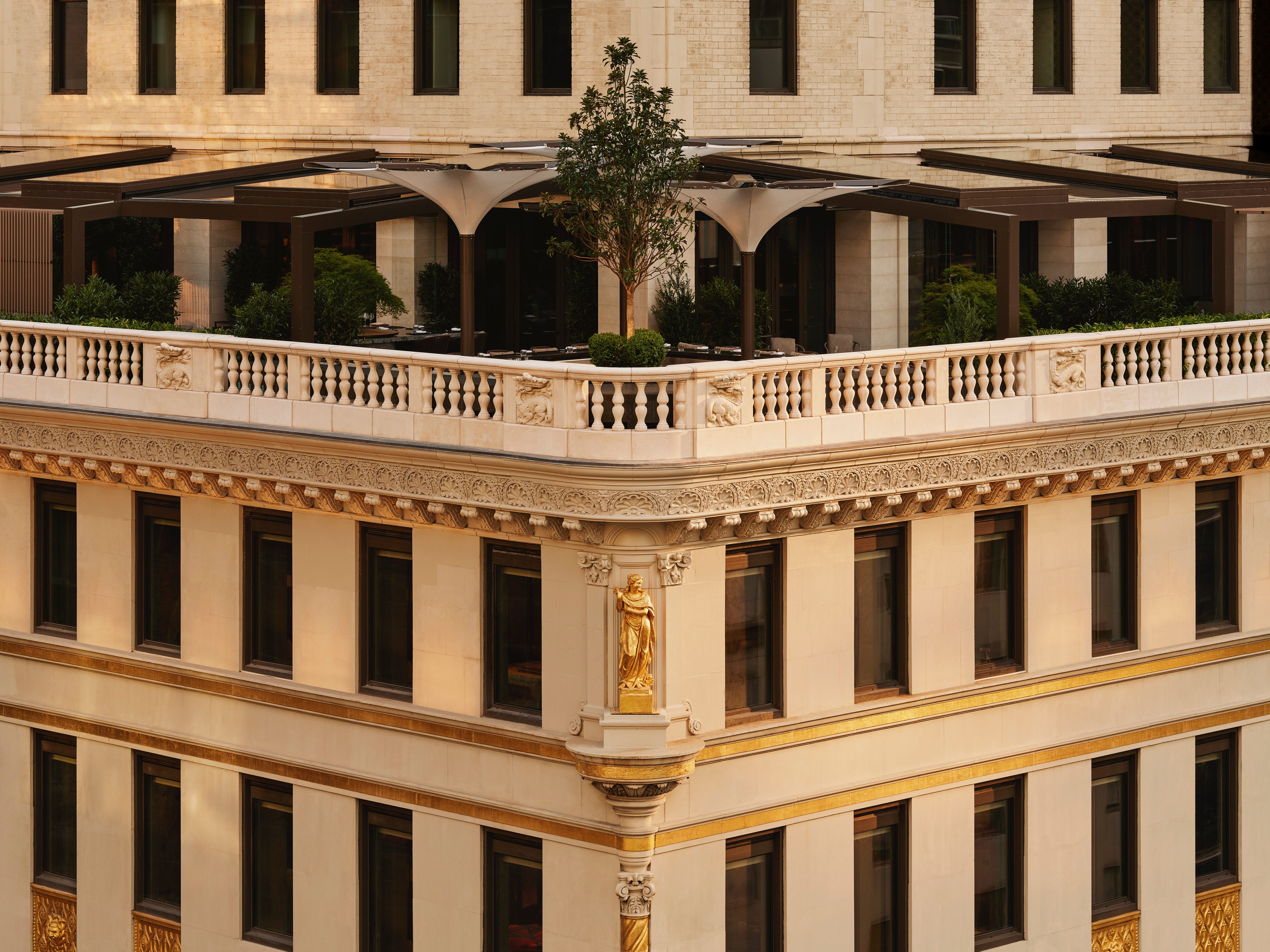
The Crown Building is a Warren & Wetmore commission. Same firm as Grand Central Terminal. August Heckscher ordered it in 1919. It opened in 1921, 26 stories of limestone and Beaux-Arts proportion. For a stretch it housed the first home of the Museum of Modern Art. A twelve-foot gold-plated rooster sat on the finial. In 1942, it was melted for the war effort.
The ground floor holds Bulgari. Across the avenue: Tiffany, Armani, Ferragamo. The building never chased company. Company came.
In 2015, Michael Shvo and Vladislav Doronin acquired the upper 21 stories. The price was roughly $500 million. They brought in Jean-Michel Gathy of Denniston, the architect Aman trusts most. The brief was the same brief Aman always gives. Enter a place of history. Leave it more legible.
“Luxury does not perform. It hosts.”
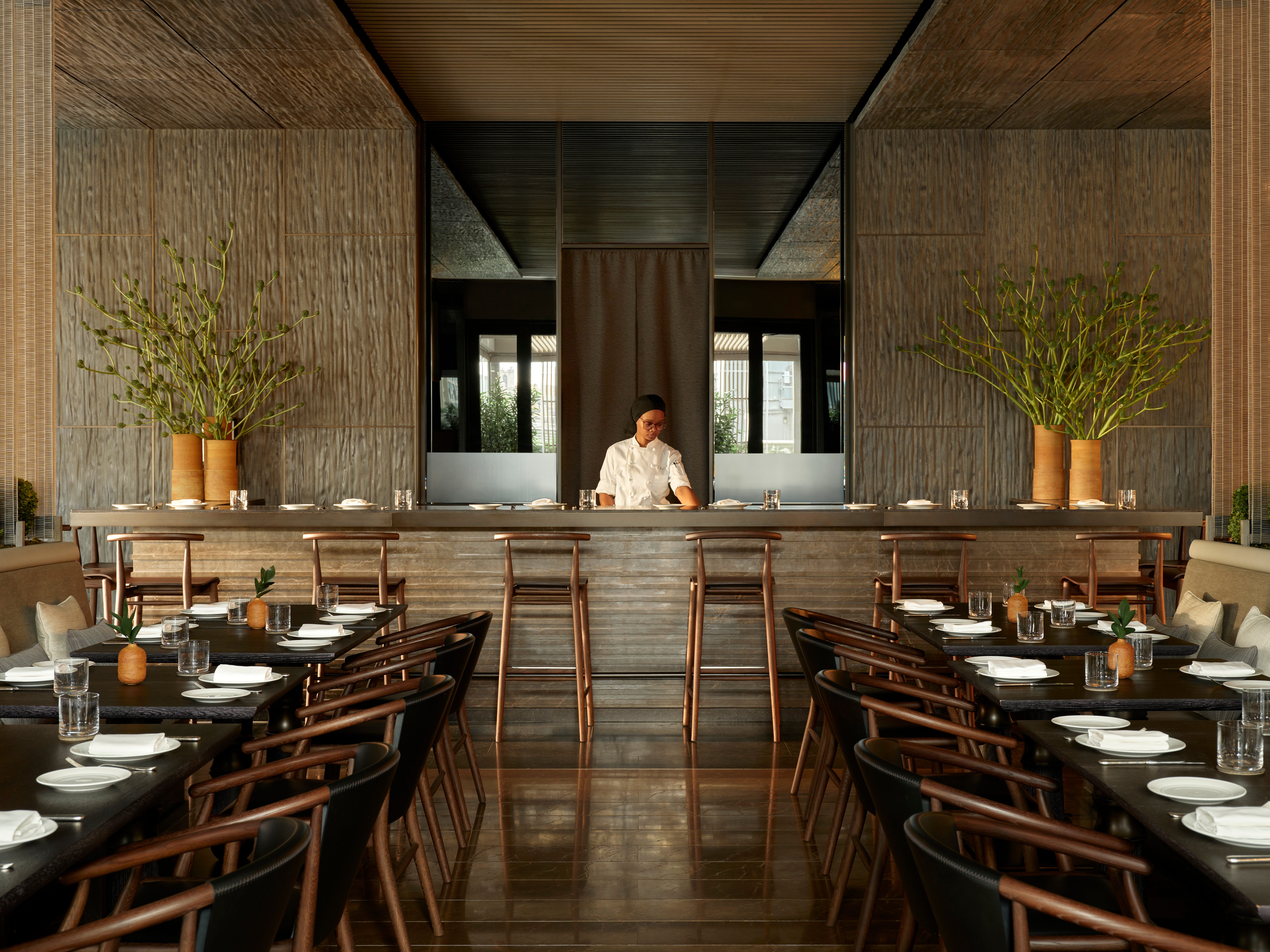
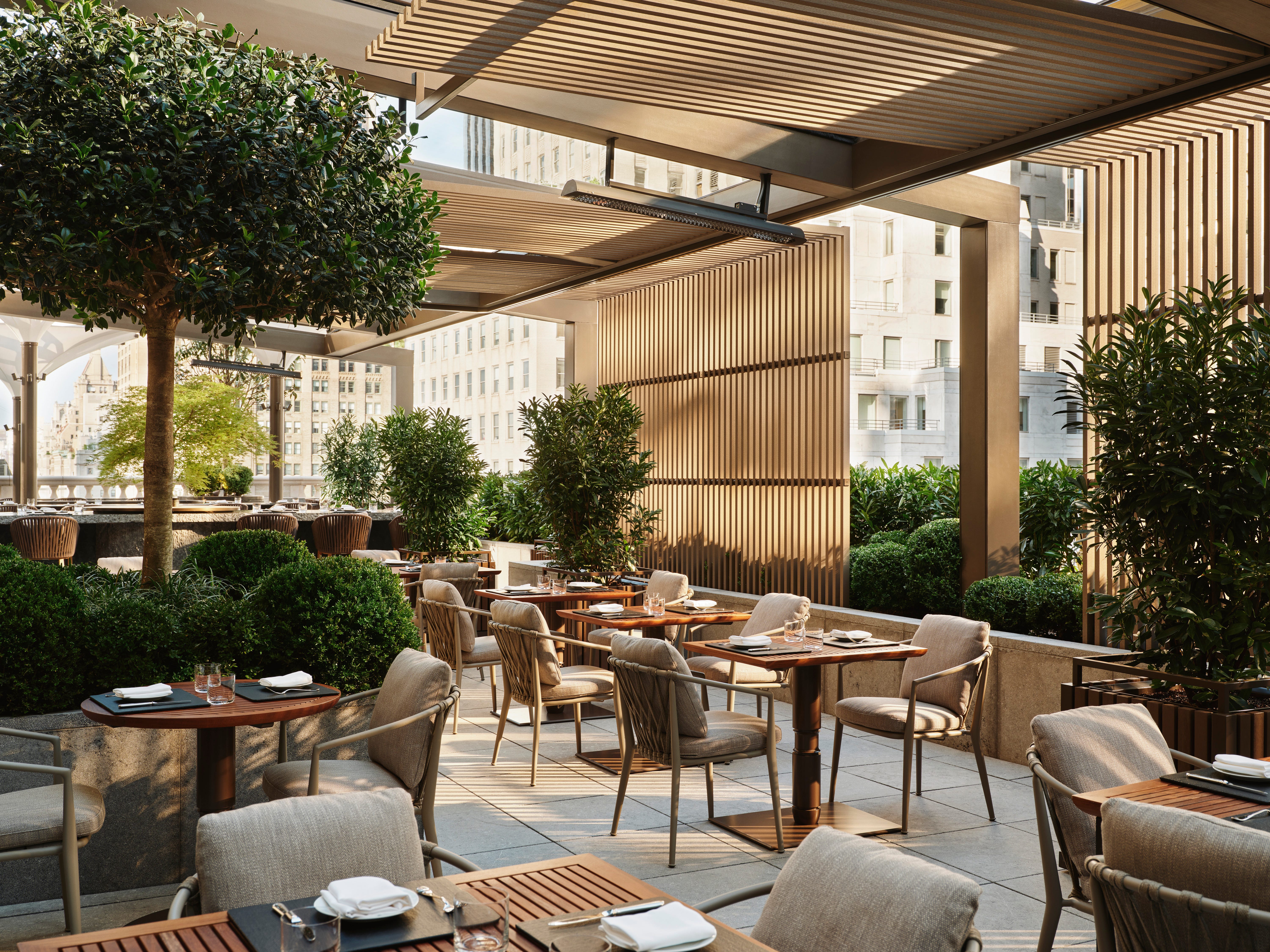
Aman New York opened in August 2022. Eighty-three suites. Twenty-two branded residences. A 25,000-square-foot spa across three floors. A 65-foot indoor pool. Two restaurants on the fourteenth floor: Arva, Italian. Nama, Japanese washoku. A jazz club below grade. A garden terrace above it. Over two hundred fireplaces. One in every suite. A first for any New York hotel.
Nightly rates start above $3,000.
But price is the wrong entry point.
Manhattan has grand hotels. The Peninsula sits four blocks north. The St. Regis, three blocks east. The Plaza holds the park’s southern gate. What Manhattan lacked was a hotel built on the principle of removal.
Zecha founded Aman on a single conviction. A hotel should feel like someone’s home. Not someone’s stage. The founding philosophy held that opulence is noise. That the most generous thing a space can do is give its guest room to think. This was easy to prove on a beach in Thailand. Or a canyon wall in Utah. The test was Midtown.


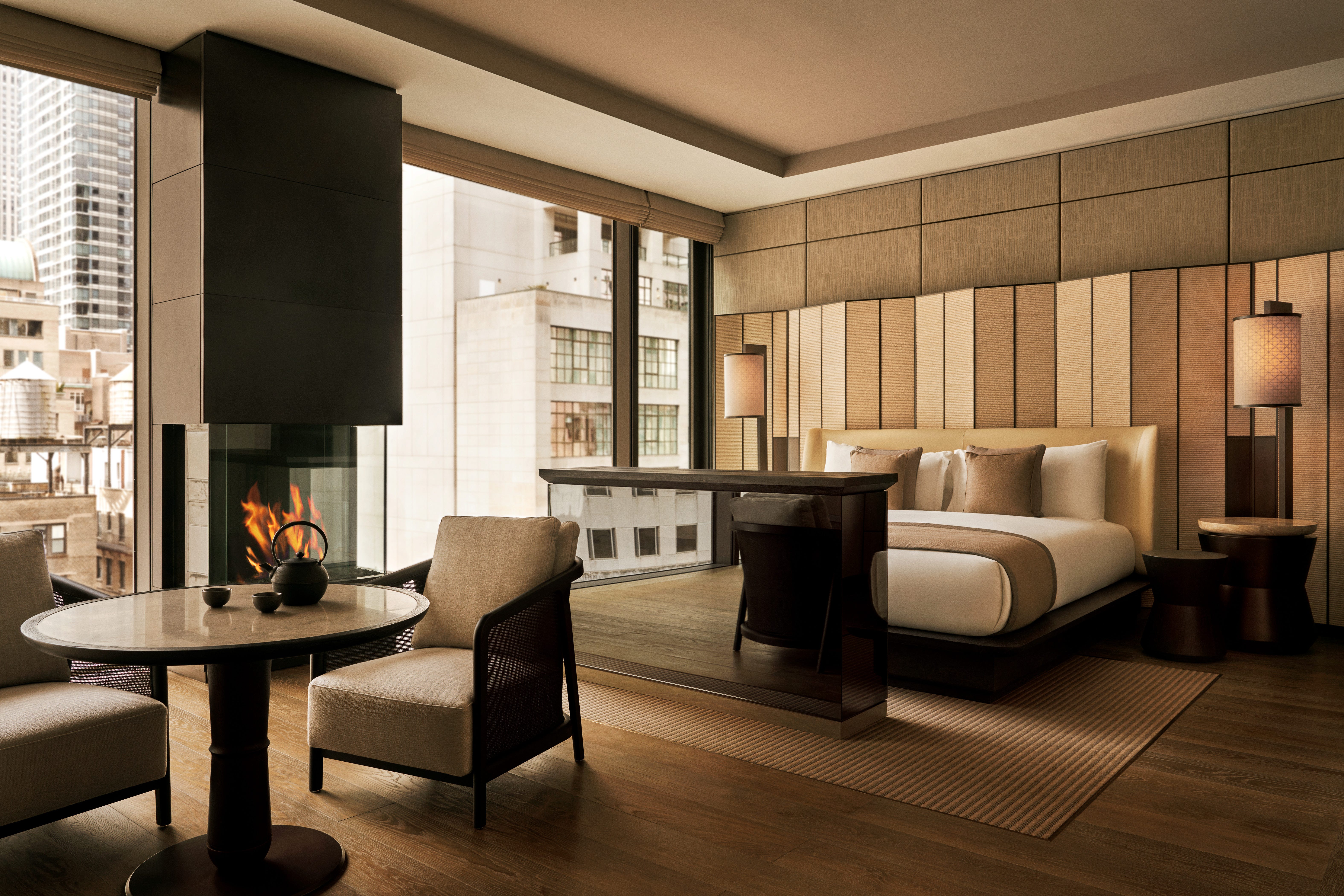
Gathy answered through material. The interiors draw from Japanese craft vocabulary. Camphor on the walls. Italian marble underfoot. Furniture low and wide. Sightlines long. The palette is neutral without defaulting to absence. There is warmth in the wood grain. Weight in the stone. Presence in the negative space between objects.
The rooms do not compete with the view. They frame it. Central Park unfurls north. The skyline stretches in every direction. The architecture lets this happen. It does not interrupt with gilt or crystal or anything that pulls the eye inward.
“The building is the frame. You are the event.”
This is the discipline. The Peninsula is grand. The St. Regis is historic. Both operate within European maximalism, where the building is the event. Aman operates from the opposite position. The building is the frame. You are the event.
There is a commercial fact worth naming. Aman has one of the most devoted client bases in hospitality. The “Aman Junkies,” a self-named community, follow the brand across continents. There is no loyalty program. The loyalty is to a sensibility.
Doronin acquired the brand from DLF in 2014.2 His tenure has expanded the portfolio into cities: Tokyo in 2014, New York in 2022. The risk was dilution. An Aman in Midtown could have read as a logo on a building that contradicted the brand’s DNA.
It did not. The Crown Building was never a loud structure. Warren & Wetmore designed it the way they designed Grand Central. The proportions carry the argument. Gathy recognized this and worked with the grain. The restoration preserved the gilded facade, the ornamental mass, the limestone. The intervention happened inside. American Beaux-Arts met Japanese-inflected minimalism. Not fusion. Correspondence. Two craft traditions in one structure, neither raising its voice.
“The room was already set.”
What Aman New York offers is a proposition. Stillness is not the absence of something. A hotel in the loudest borough on earth can organize itself around the idea that the best hospitality is the kind you barely register. A 1921 building can hold a 1988 philosophy without contradiction.
The Crown Building spent a century acquiring weight. Aman spent four decades perfecting a single idea. They met at the corner of Fifth and 57th.
The room was already set.
All images courtesy of Aman
Higher Class Editions Venustas Ante Omnia
Amanpuri was the first Aman property. Zecha built it with partner Anil Thadani using personal funds after no bank would finance a 40-room resort. Nightly rates were reportedly five times higher than any competitor in Phuket at the time.
The Crown Building was designated a New York City landmark in 2024, further cementing the building's architectural significance independent of its current tenant.