


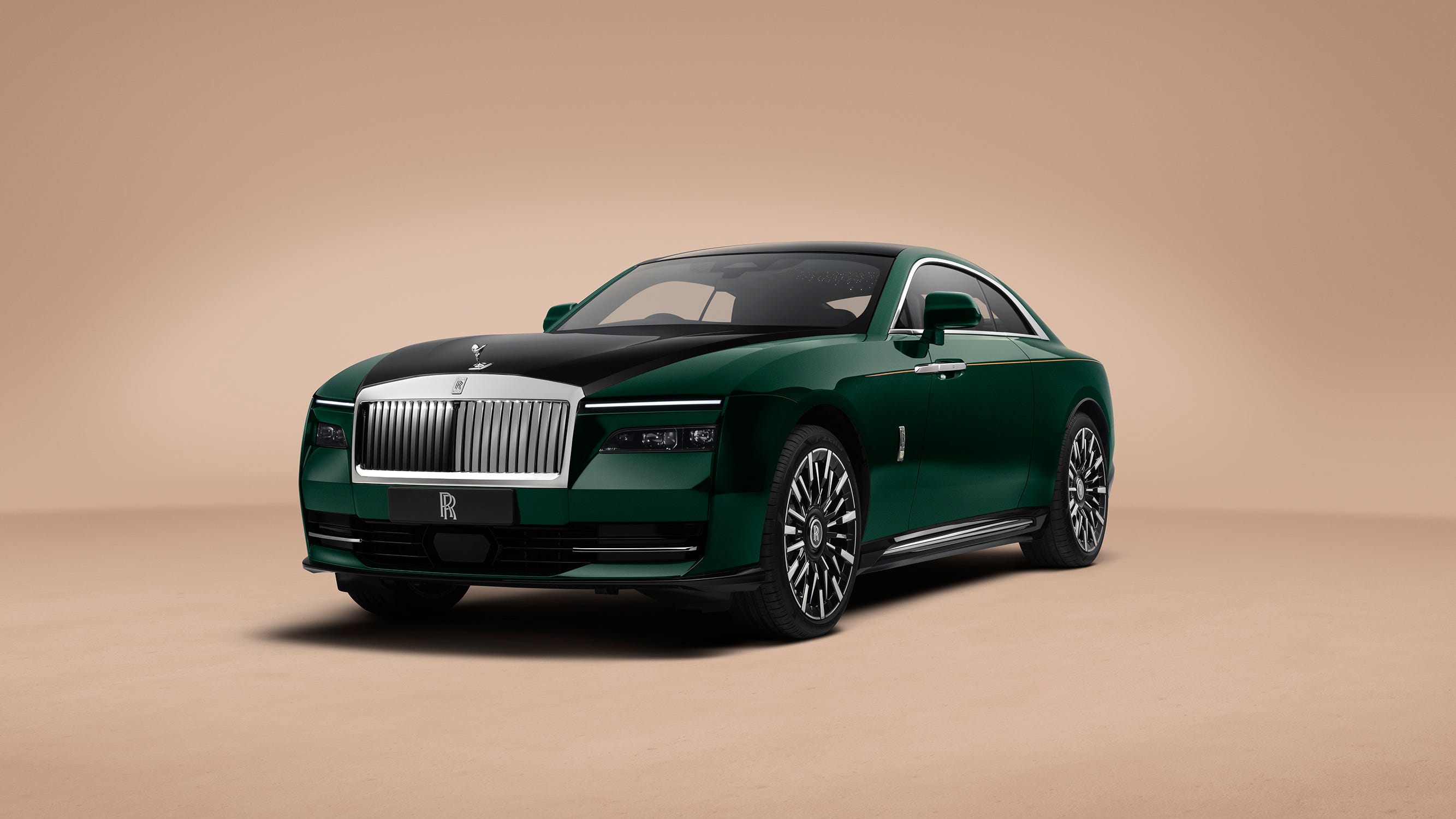
Rolls-Royce released Spectre Series II on June 2, 2026. Most of the automotive press covered it as a specification update: up to 18% more range, up to 14% faster charging, new materials, new wheels. The least interesting part of the announcement is the numbers.
The interesting part is in the word “Series.”
Every Rolls-Royce generation eventually receives a Series II designation. The Phantom received one. The Ghost received one. The Cullinan received one. The designation means the house has lived with the existing car long enough to understand what it should become next. Series II is a revision authored by proximity, by years of watching how clients use the object. The car was correct the first time. The task is to deepen what was already there.
Henry Royce left one sentence that governs everything the house has done since 1904: “Take the best that exists and make it better.” That sentence is easy to print on a wall. It is harder to practice. Most manufacturers improve by replacement. A new model obsoletes the previous one. The customer who bought last year’s version owns a discontinued object. Rolls-Royce works from a different premise. The original form holds. The house returns to it, and the returning is the philosophy.
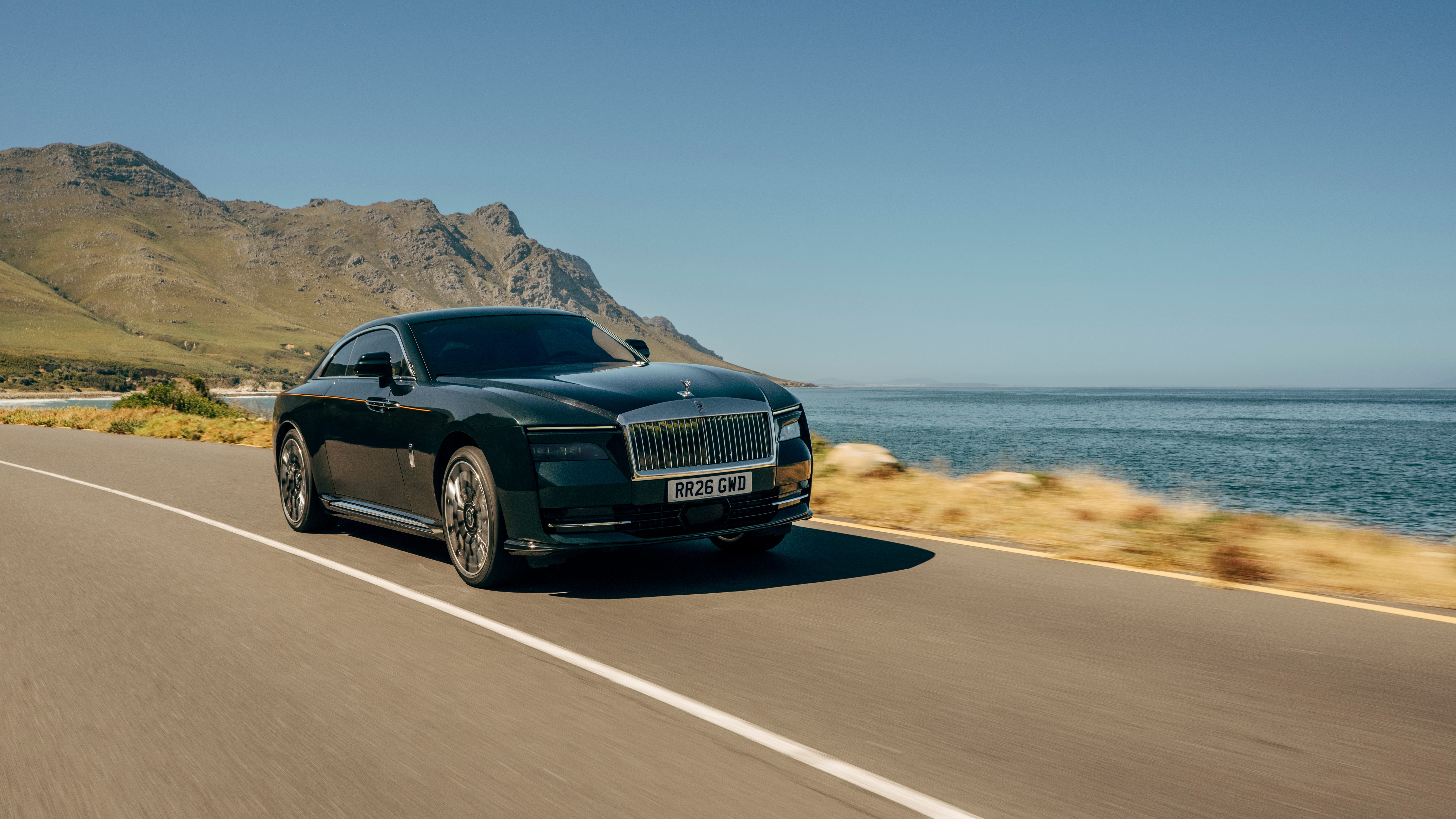
Spectre debuted in October 2022, and the question it carried was genuine. Could a house built on the V12, on the particular sensation of twelve cylinders firing in sequence beneath a bonnet long enough to land a small aircraft, survive the transition to electric power without losing the thing that made it worth driving?
The original Spectre answered yes. Spectre Series II answers why.
Range extends to 390 miles on the WLTP cycle. Torque holds at 1,015 Nm in the standard car, rising to 1,100 in Spirited Mode on the Black Badge variant, where power output reaches 500 kW through Infinity Mode. That makes Black Badge Spectre Series II the most powerful motor car Rolls-Royce has produced. Charging times drop by up to 14%. None of this required a new platform. None of it required a new silhouette. The fastback profile, the split headlamp signature, the proportions that earned the car its reputation since 2022: all retained. The confidence in the original design is the first statement Series II makes.


The second statement is in the materials.
Duality Twill is a rayon textile woven from bamboo, embroidered with an abstract rendering of the founders’ interlocked initials. The pattern draws from nautical rope lines, a reference to the sailing yachts of the Côte d’Azur, where Henry Royce spent his winters at Villa Mimosa in Le Canadel. A Duality Twill interior requires up to 2.6 million stitches, up to 10 miles of thread, and up to 25 hours of construction time. The Placed Perforation leather option cuts 78,138 individual holes in three sizes (0.8, 1.0, and 1.2 millimeters) across the shoulder and headrest areas of all four seats. The pattern renders cloud shadows in moonlight. When extended to the illuminated door panels, the perforations disperse as they approach each light source, scattering like starlight through shifting cloud cover.
Each material is an argument. Every one requires a decision about what craft means inside a car that has no engine noise, no mechanical interruption between the driver and the interior. Electric propulsion gave Rolls-Royce something the V12 never could: complete acoustic control over the cabin. With the combustion engine gone, the interior carries the entire experience. The materials have to earn the room they occupy. At Goodwood, they earn it stitch by stitch.
The Brindled Walnut veneer tells a similar story. The wood comes from non-fruiting walnut trees that would ordinarily be burned. The residual eucalyptus fibers come from fine paper production. Both are waste materials. Compressed, cut into veneer sheets, sealed with a lacquer infused with powdered glass flakes, then finished with a clearcoat that makes the shimmering particles appear suspended beneath the surface. Rolls-Royce found a way to turn a material destined for a furnace into something worth displaying inside a car that costs more than most apartments.


“The gap between ‘good enough’ and ‘correct’ is where Rolls-Royce lives, and it is measured in thread counts and millimeter tolerances.”
The clock deserves its own paragraph. The Series II timepiece draws from aviation instruments: cast metal hands, a stripped-back dial, legibility as the governing principle. It sits inside a vitrine that also houses a stainless steel Spirit of Ecstasy figurine, up-lit like a museum object. A clock inside a cabinet inside a car. Three layers of enclosure, each one deliberate. The new 23-inch forged alloy wheels are cut with 2.5-millimeter radii, sharp enough to hold their faceted definition after polishing. Each wheel is hand-finished for up to six hours. The Illuminated Fascia artwork renders 8,108 individual pixel-like illuminations in a directional wave pattern inspired by the mist over the South Downs woodland beyond Goodwood.
These details would be invisible in a press photo. They exist for the person sitting inside the car, and for the people at Goodwood who made the decision to include them. The gap between “good enough” and “correct” is where Rolls-Royce lives, and it is measured in thread counts and millimeter tolerances.
The most revealing data in the Series II announcement has nothing to do with engineering.
Rolls-Royce studied how clients live with Spectre. The car is typically the second Rolls-Royce in a seven-car garage. Average annual mileage holds at roughly 4,000 miles. But one European owner has driven more than 30,000 miles in two years. A client in Los Angeles drives Spectre daily from the top of a hill to a garage below, arriving with more range than when they departed, courtesy of regenerative braking. A client in Korea built a gallery within their residence to display their Spectre as a work of art.
A workhorse, a daily ceremony, and a sculpture. The same car accommodates all three without contradiction, and that flexibility is the most Rolls-Royce quality about it. The house has always built cars that adapted to their owners rather than demanding the reverse. Electrification made this easier, because the powertrain imposes fewer constraints. The cabin belongs entirely to the driver from the first second.


Rolls-Royce Motor Cars has been a wholly owned subsidiary of BMW AG since 2003. The Goodwood manufacture was built from a greenfield site on the Earl of March’s estate in West Sussex, designed by Nicholas Grimshaw, opened with 300 people producing one car per day. Charles Rolls and Henry Royce met at the Midland Hotel in Manchester on May 4, 1904. Rolls-Royce Limited was incorporated on March 15, 1906. Between those dates and today, the house changed hands, split from its aero-engine division, passed through Vickers, survived a bidding war between Volkswagen and BMW, and was ultimately reconstituted as a subsidiary with a new factory, a new workforce, and no physical continuity to the original operation.
The question is whether a house rebuilt from a trademark deal can carry the weight of a philosophy established 122 years ago. Spectre Series II does not settle that question. It advances the case. The craft decisions, the material innovation, the willingness to spend up to 25 hours embroidering a textile that most passengers will never examine at stitch-level resolution: these are choices a volume manufacturer would not make. They are choices Goodwood makes because the house still believes the interior of a car is a room, and a room deserves to be furnished as though someone lives in it.
“Small things make perfection, but perfection is no small thing.” Henry Royce said that over a century ago. Chris Brownridge, the current Chief Executive, quoted it in the Series II announcement. The line has appeared so often in Rolls-Royce press materials that it risks becoming wallpaper. Series II earns it back. The 2.5-millimeter wheel radii. The six hours of hand-finishing. The 78,138 perforations in three sizes. These are small things. And they are the difference between a manufacturer issuing a mid-cycle update and a house practicing its founding philosophy where anyone paying attention can see it.
The BMW ownership creates a structural complication that houses like Patek Philippe, Aman, and Steinway do not share. Each of those can trace an unbroken chain of private custody from founding to present day. Rolls-Royce cannot.
But when a house releases a second edition of a car and the most revealing changes are measured in stitches and glass-flake lacquer, the philosophy is alive. The hands may have changed. The workshop may have moved. The sentence Henry Royce wrote still runs the floor.
The workshop is still open.
All images courtesy of Rolls-Royce Motor Cars
Higher Class Editions Venustas Ante Omnia